 12Focus
How to track your goals
Once a week, count the actions you planned and the ones you finished, and write one line on what got in the way. That count tells you whether the goal is moving; a check-in that only proves you showed up doesn’t.
It takes about ten minutes. Copy the weekly log or read why it works.
Updated
What should you actually track?
Many trackers record that you checked in. A goal needs something else: whether the plan you made fits the week you have. Three numbers are enough.
- Actions planned for the week. Three is a good default.
- Actions done by the end of it.
- One line on what got in the way. This is the part you will use.
Why count actions instead of hours?
Hours measure time spent, not whether the piece you planned got done. Two hours of “working on the thesis” can leave nothing you can point to. “Write the methods paragraph” is either finished or it isn’t.
So define one action as something you can finish in one sitting, give it a day, and count it done only when it is finished. Breaking a big goal into weeks and actions shows how to cut them.
How often should you check?
Once a week, on the same day, for ten minutes. Checking every day turns one slow day into a verdict. A week is long enough to show a pattern and short enough to fix it.
- Count planned and done.
- Name the one thing that got in the way.
- Cut next week’s plan to what fits. See the weekly review.
What do the numbers tell you?
After two or three weeks, compare planned to done.
- All done, every week: the plan may be too easy. Add one action.
- About half done, often: the plan is too big for your week. Cut it, don’t push harder.
- The same obstacle three weeks running: that is your next action. Fix the slot, the place or the first step.
- Less than half for two weeks in a row: shrink the plan first. If the goal still feels like someone else’s after that, revisit it at the end of the cycle.
A missed week is data, not a verdict. Keep the goal, change the plan.
The weekly log
Copy it into your notes and fill in one block each week. One block per goal.
Let the week do the counting
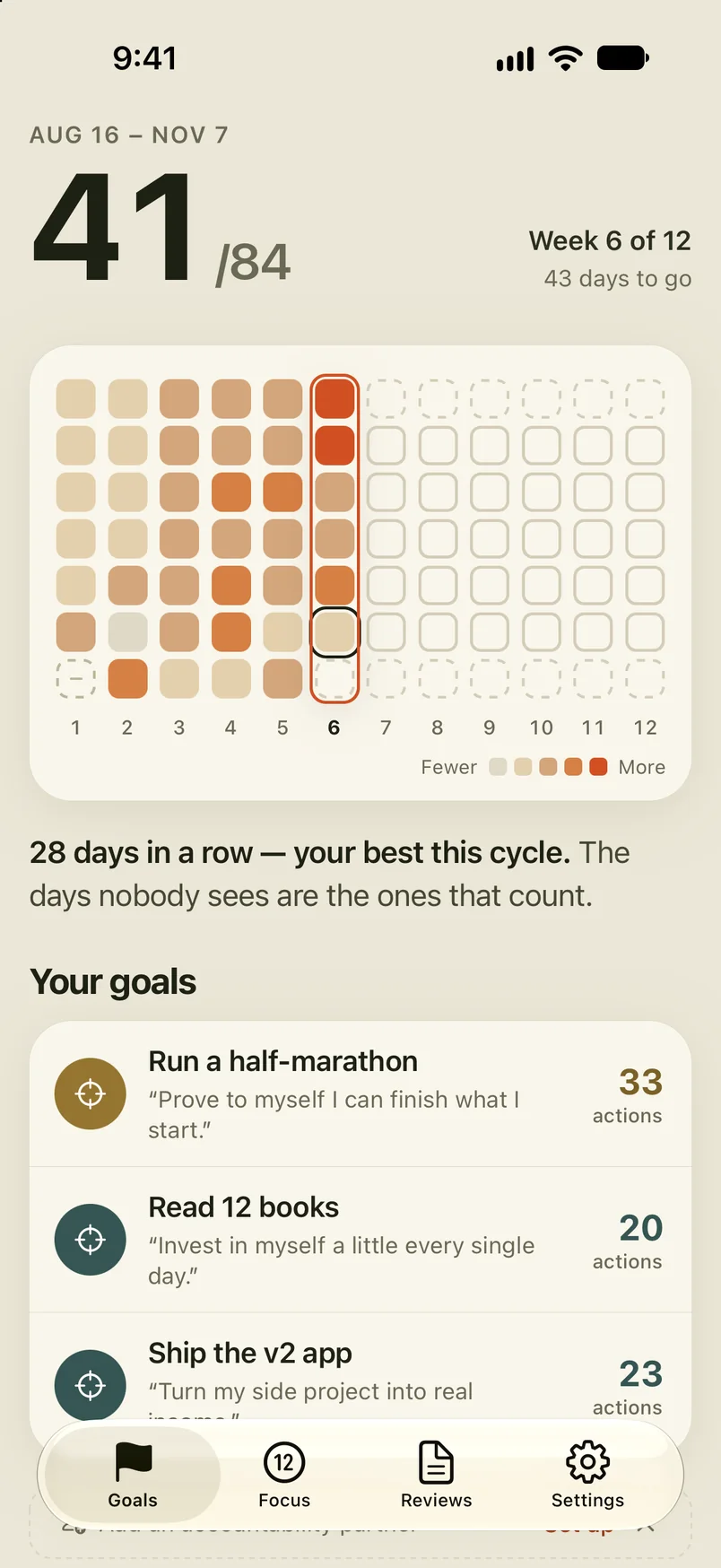
A log in a notes app depends on you opening it. 12Focus holds up to three goals for a 12-week cycle, shows this week’s actions where you’ll see them, and closes the week with a short review, so the count and the one line are in front of you when you decide next week. On iPhone and Android, finished actions can also earn minutes for the apps you choose to limit.
What people ask before they start tracking
What is the best way to track goals?
Count actions each week: how many you planned, how many you finished, and one line on what got in the way. A weekly count shows whether the plan fits your life; a check-in streak that only counts showing up says little about the goal.
How often should I check my progress on a goal?
Once a week, at the same time. Daily checking turns one slow day into a verdict; a weekly look shows a pattern you can act on.
Should I track hours or actions?
Actions. Hours measure time spent, not whether the planned piece got done. Three actions planned and two done tells you more than six hours logged.
What if I miss a week?
Write down the number anyway and what got in the way. A missed week is data: shrink next week’s plan to what fits, and keep the goal.
Do I need an app to track goals?
No. A notes page and the template on this page are enough for one goal. An app helps when you track up to three goals and want the weekly look to happen without you setting it up.
When is it time to change the goal instead of the plan?
If you finish less than half of your planned actions for two weeks in a row, cut the plan first. If the goal still feels like it belongs to someone else after that, change the goal at the end of the 12-week cycle.
Know by the end of the week if it worked
12Focus holds up to three goals for a 12-week cycle, turns each week into a few actions, and closes it with a short review.