 12Focus
How to find an accountability partner
Ask one person who will reply every week and won’t judge a bad one: a friend, a colleague, or someone with a goal of their own. Agree on one day, and send them your plan for the week and, at the end of it, what actually happened.
A goal only you know about is easy to move to next week. One person expecting your Sunday message makes it harder to move, and easier to come back to after a bad week.
Updated
What does a partner do?
They hear your plan for the week, and at the end of it they hear what happened. That is most of the job. They don’t coach you, fix your plan or check on you mid-week. They ask, and they reply.
It helps because the report is due. In a four-week study, Gail Matthews of Dominican University of California split 149 adults into five groups. The group that emailed a supportive friend a weekly progress report accomplished significantly more than the other four, including people who sent a friend their plan but no reports. The progress was self-rated and the study is small, so read it as a direction, not a promise.
A larger review points the same way. In a meta-analysis of 138 studies, Harkin and colleagues (2016) found that monitoring progress helped people reach their goals, and helped more when the progress was reported to others or made public.
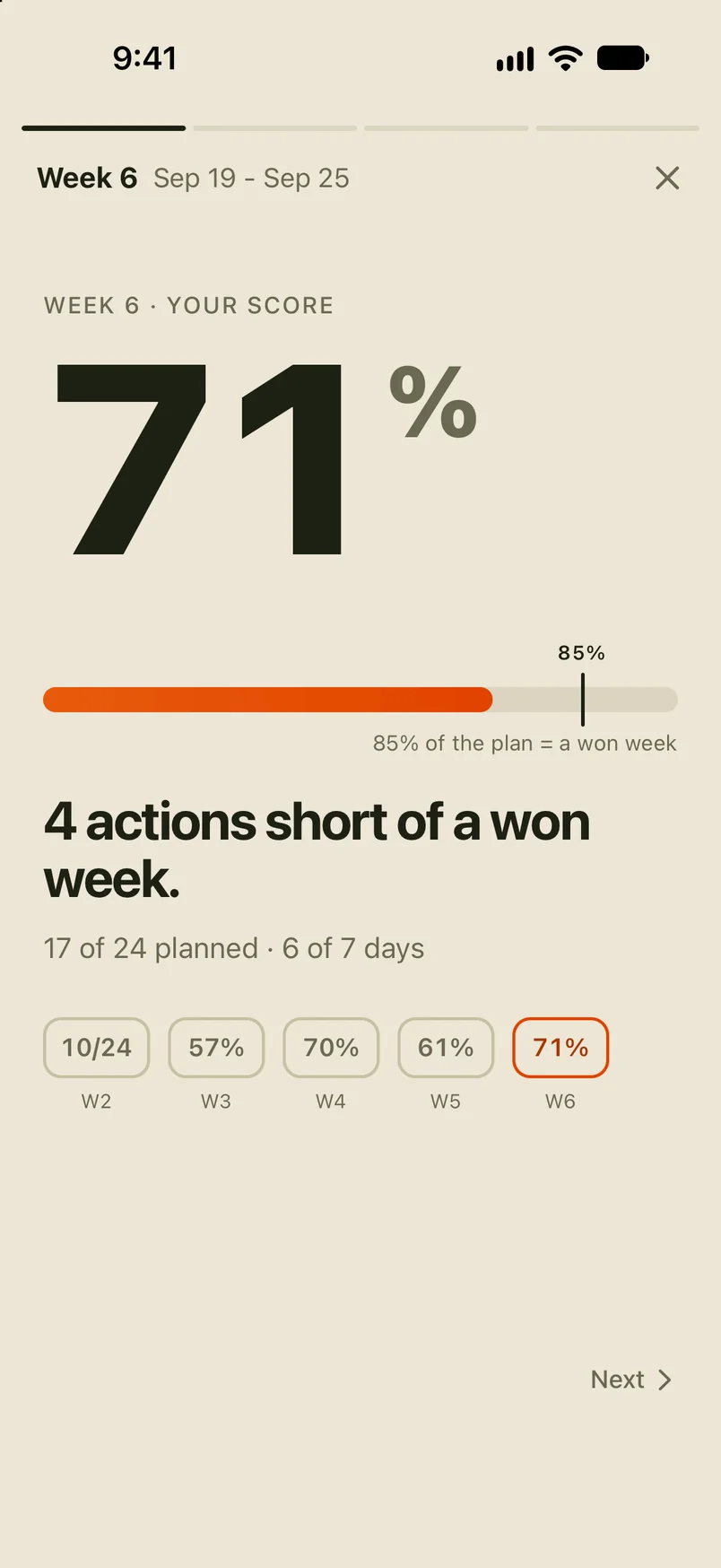
2 of 3 runs. Thursday didn’t happen: work ran late.
Two is still two. Same plan next week?
Who makes a good partner?
Someone who will still reply in week 7, when starting is no longer exciting. Three checks:
- They reply every week. Pick the friend who answers every Sunday over the mentor who answers when they can.
- They ask instead of judging. If you would be tempted to hide a bad week from them, pick someone else. A partner who only hears the good weeks can’t help with the bad ones.
- They have a goal of their own. Then it’s a swap, not a favour: you send each other the week. The goals don’t need to match, only the day.
Where do you find one?
Start with people you already talk to every week. The habit of replying is already there.
- Friends and family you message most weeks anyway.
- A colleague or classmate with a goal of their own: a course, an exam, a side project.
- People doing the same kind of thing: a running club, a study group, a writing group, a course cohort.
- An online community for the goal. Many have a thread where people look for a partner. Pick someone in a nearby time zone, so “Sunday evening” means the same day for both of you.
If the first person says no, they answered honestly in one message. Ask the next one.
How do you ask someone?
Keep the ask small and specific, give it an end date, and make no an easy answer. Twelve weeks is long enough to matter and short enough to agree to. Say four things:
- The goal, in one line.
- What you’ll send and on which day.
- What you need back: a reply, nothing more.
- When it ends, and that no is fine.
I’m training to run 10 km in the next 12 weeks. Could I send you a short update every Sunday: what I planned and what actually happened? All you need to do is reply. Happy to do the same for a goal of yours. And no is a completely fine answer.
Yes, Sundays work. I’ll send you my thesis pages.
What do you send each week?
Four lines, on the same day, the misses included. It takes two minutes after your weekly review.
- Planned: the actions you meant to do.
- Done: how many, out of how many.
- Got in the way: one line, facts only.
- Next week: one change, and where you’d like help, if anywhere.
Fill it in here, then copy it into your message. What you type stays in your browser.
How often should you check in?
Once a week, on a fixed day. A weekly message is short enough to keep up for 12 weeks and long enough to show a pattern. Daily check-ins are a lot to keep up, and one missed message starts to feel like a failure.
Send it right after you count the week, while the numbers are in front of you. Mid-week, message only when you want help. That is yours to choose, not something your partner checks.
What if it stops working?
Agree on both before you start, so neither feels personal when it happens.
- You had a bad week: send the check-in anyway. “0 of 3, I was ill” is still a check-in, and the next week starts from the plan instead of a restart.
- Your partner goes quiet: ask once. If two Sundays pass without a reply, thank them and ask someone else. It says nothing about your goal.
- Week 12 arrives: decide together whether to do another 12 weeks. An end date makes stopping easy, and that makes saying yes easier too.
0 of 3. I was ill all week.
Get well first. Week 6 is still there.
Is there an app for this?
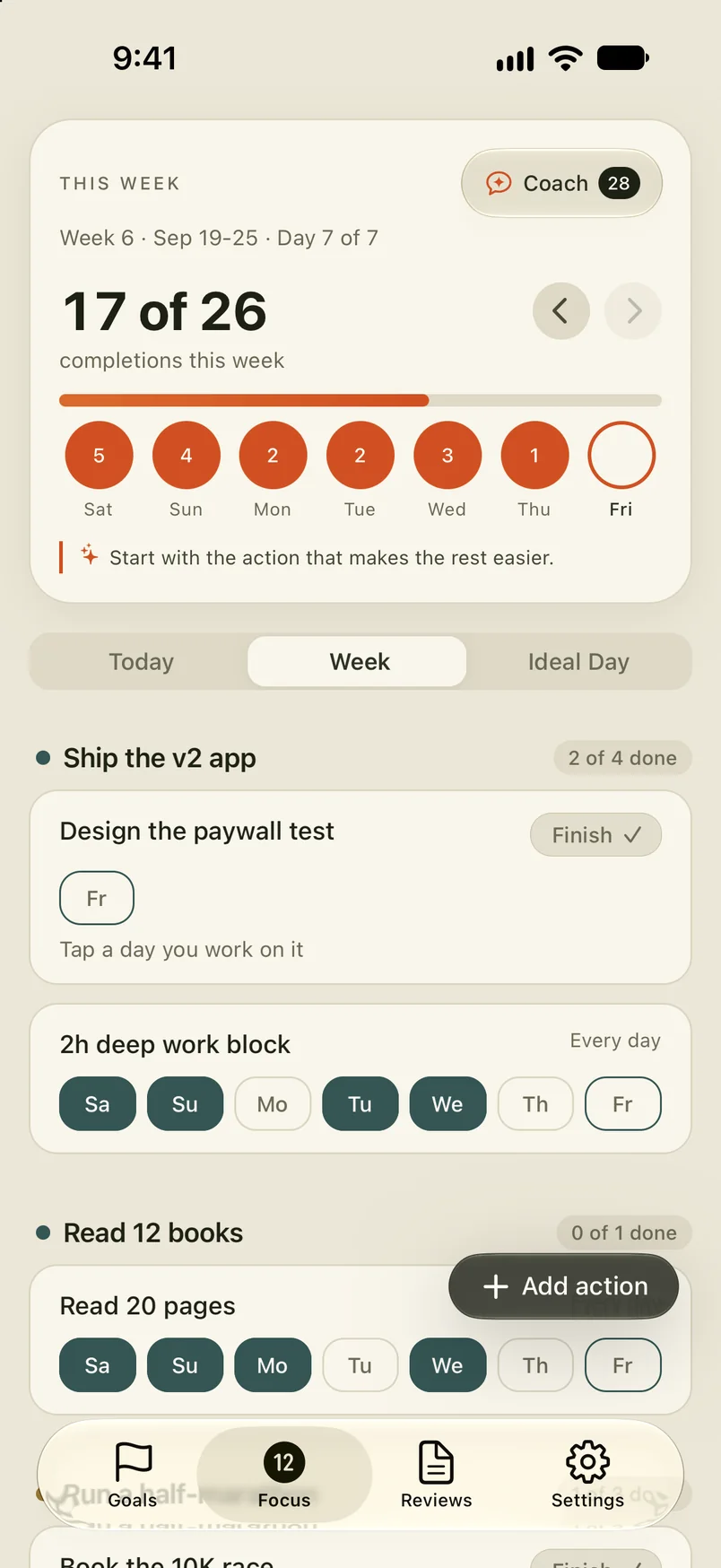
12Focus has one built in, and the partner is a real person you choose, not an AI. Both of you opt in. When you finish your weekly review, a short digest of your week goes to your partner, and they can answer with a quick encouragement or a short note.
Nothing is sent mid-week unless you choose to send it, and either of you can pause or end the sharing at any time. It works on iPhone, Android and the web. How the partner works in 12Focus.
Before you ask someone
What is an accountability partner?
Someone you tell your plan for the week and, at the end of it, what actually happened. They don’t coach you or check up on you. They ask, and they reply.
How do I find an accountability partner?
Start with someone you already message every week: a friend, a colleague, a classmate. Then try people doing the same kind of thing, like a running club, a study group or an online community for the goal. Ask for 12 weeks and one message a week.
What should I send my accountability partner?
Four lines each week: what you planned, how much of it you did, what got in the way, and one change for next week. Send it on the bad weeks too.
How often should accountability partners check in?
Once a week, on a fixed day. Message mid-week only when you want help.
Is the “95% with an accountability partner” statistic real?
It is usually credited to a 2010 study by the American Society for Training and Development (ASTD). We could not find that study, and the pages that quote the number don’t link to it. The research you can read points the same way without the round number: in Gail Matthews’ four-week study of 149 adults, people who sent a friend weekly progress reports accomplished significantly more than the four other groups.
What if my accountability partner stops replying?
Ask once. If two weeks pass without a reply, thank them and ask someone else. Agree on a 12-week term at the start, so ending is easy for both of you.
Someone to tell on Sunday
12Focus holds up to three goals for a 12-week cycle, closes each week with a short review, and can share that week with a partner you choose.