 12Focus
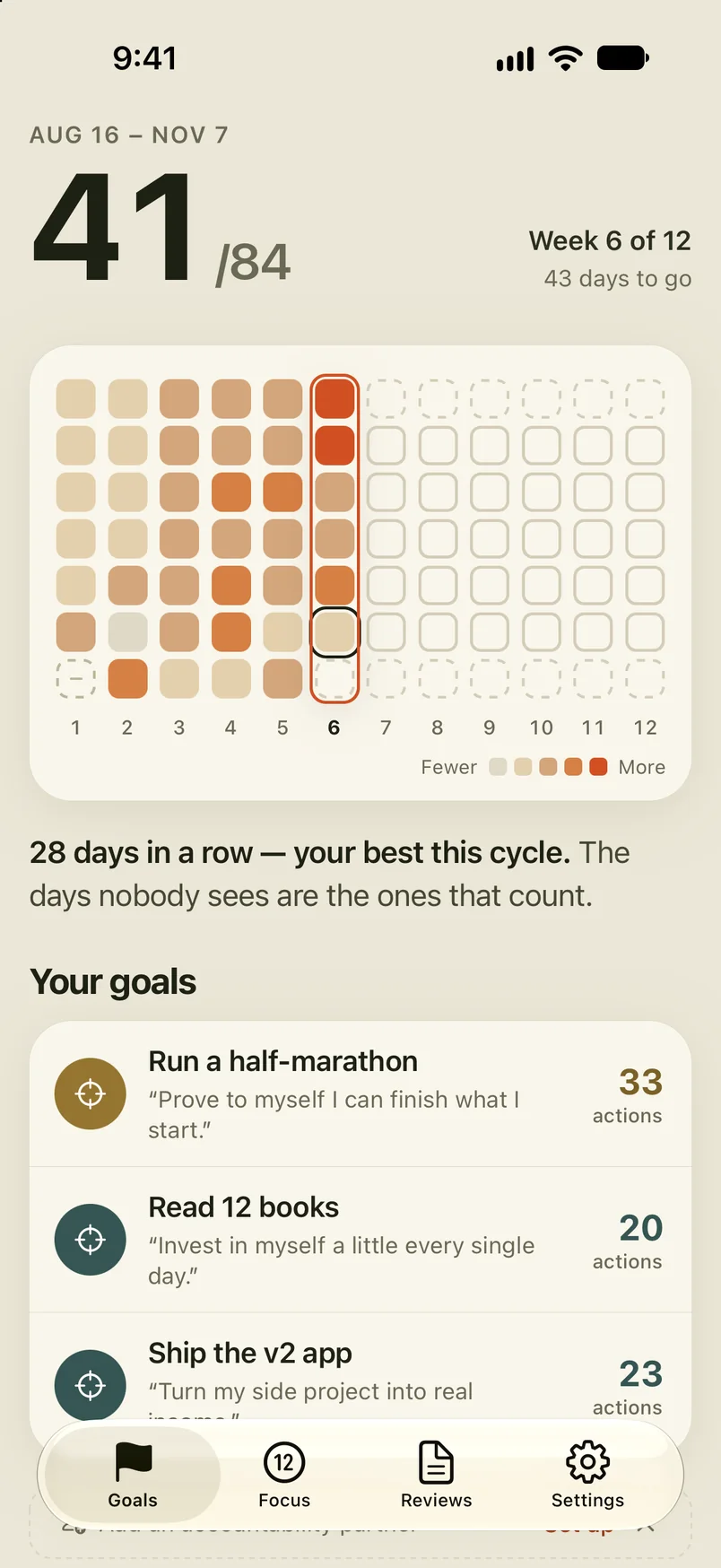
A goal without a system is a wish. The wish is real on day one, and it's still technically real on day ninety — but somewhere in between, the weeks filled up with other things, and the goal became a background intention rather than an active pursuit. This isn't a discipline problem. It's a structural one. Here are five common reasons goals get dropped, and the fix for each.
Most goal tools are either too granular (task managers) or too abstract (vision boards). What's missing is the middle layer: a repeating weekly cycle that translates long-term direction into concrete near-term action. Without that layer, goals stay conceptual — admirable, but not executable.
- Annual goals are too distant to create weekly urgency.
- Task managers don't distinguish between what moves the goal and what's just busy.
- Without reviews, the same failure patterns repeat without ever producing learning.
- Accountability only works if someone actually sees your commitments each week.