 12Focus
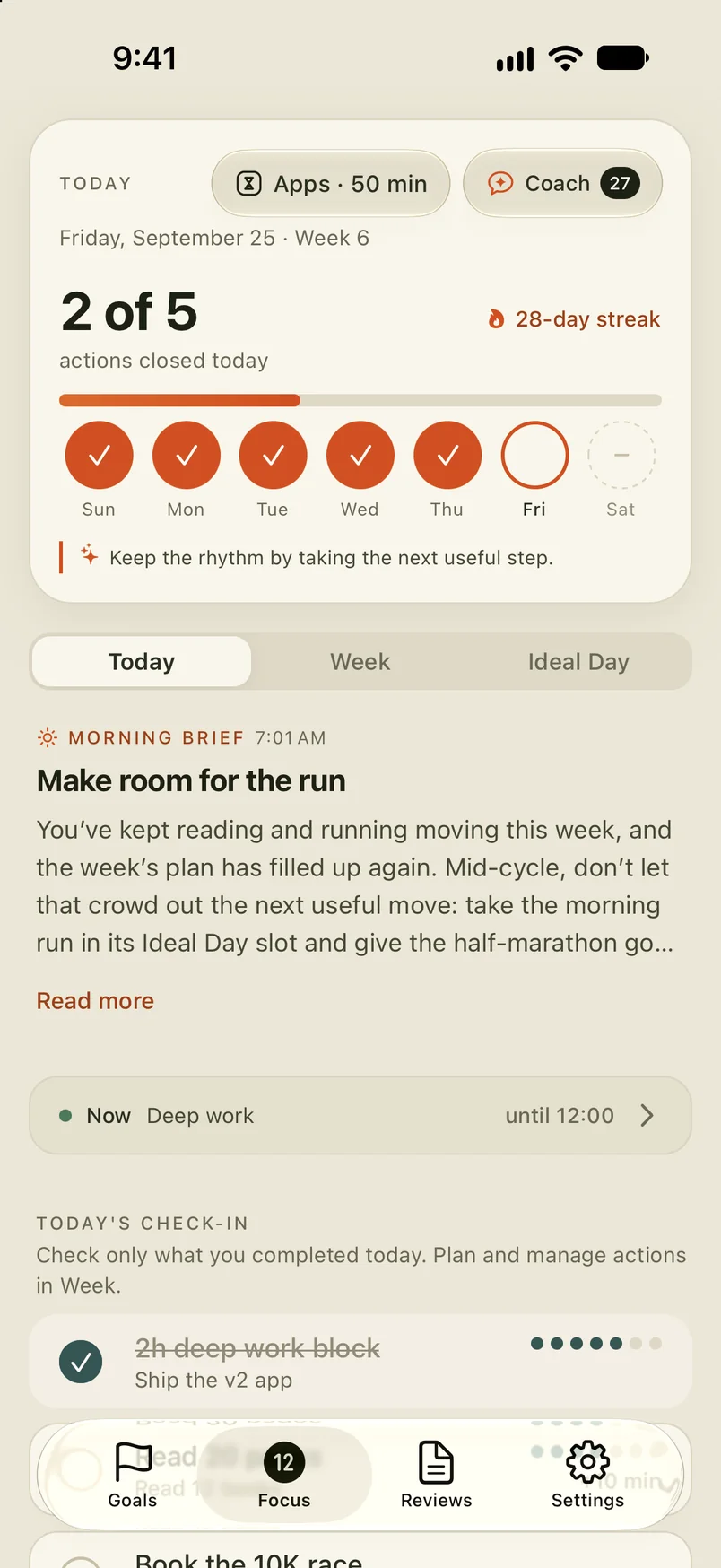
Setting a goal is easy. The goal feels real and close on day one. But by week three, the urgency has softened, other things have filled the calendar, and the goal is still technically active — just quietly deprioritized. This isn't a character flaw. It's what happens when a goal lives only in your head. More on why you quit goals, and how to keep going.
Follow-through requires structure that works even when motivation doesn't. That means a short list of weekly priorities you've committed to publicly, a daily focus that connects to those priorities, and an honest review at the end of the week that doesn't let you slide past what actually happened.
- Motivation is variable — execution systems are not.
- Private goals are easy to quietly abandon; visible commitments carry more weight.
- Without weekly reviews, failure doesn't produce learning — it just repeats.
- The gap between planning and follow-through is a structural problem, not a personal one.